
Hydraulic disc brakes have revolutionized mountain biking—offering unmatched stopping power, modulation, and control. But when it comes to brake fluid, the choice between DOT fluid and mineral oil isn't just a matter of preference—it’s about system design, safety, and performance. Here’s a clear breakdown to help you understand the nuances:
Why You Can’t Swap Them
Each brake system is engineered to work exclusively with one type of fluid. DOT systems require DOT fluid; Shimano (and similar designs) demand mineral oil. Switching fluids can cause leaks, seal damage, and even render your brakes unsafe.
DOT Fluid (DOT 3, 4, 5.1…)
Pros: Widely available and economical. Meets regulated boiling-point standards since it's used in automotive systems.
Cons: Hygroscopic—absorbs moisture from the air over time—lowering its boiling point and brake performance.
Impact of Moisture: Leaks are dangerous, especially on carbon frames. Moisture can damage paint, resin, and carbon fiber.
Mineral Oil
Pros: Non-hygroscopic—doesn’t absorb moisture—so it holds stable boiling performance over time. Also gentler on bike finishes and safer for technicians.
Cons: Water doesn’t mix; it settles at the system’s bottom (usually the caliper) and can boil sooner, potentially impairing performance.

Local Climate Matters
In humid regions (like Vancouver or Squamish), both systems see moisture intrusion—either absorbed into DOT or pooled in mineral oil. Annual brake bleeds are critical, regardless of fluid type, to maintain performance and safety.
The Verdict
There’s no outright “better” fluid—it comes down to what your brake system was designed for and your maintenance habits. Stick with the correct fluid type and bleed your brakes regularly to keep things safe and reliable.
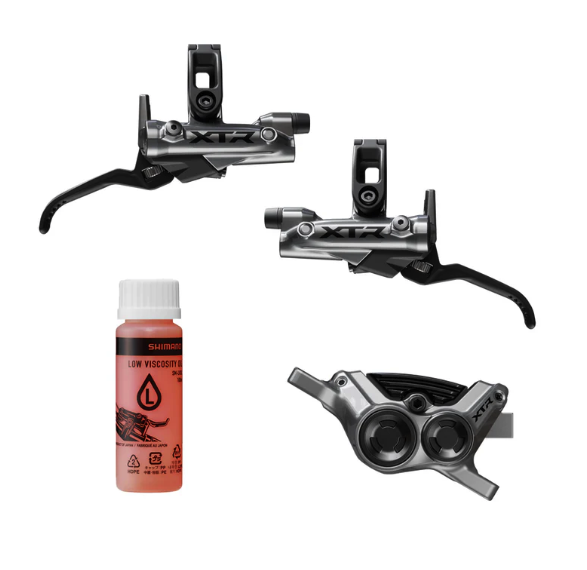
Spotlight: Shimano’s New XTR Brakes & Low-Viscosity Mineral Oil
Shimano’s latest XTR and XT systems demand their low-viscosity mineral oil—specifically formulated for optimal high-performance braking.
Why low-viscosity? Faster flow, more consistent pressure, and smoother lever feel—even in extreme temperatures.
Compatibility Warning: Only use the Shimano SM-LVOIL (low-viscosity mineral oil) specified for these systems. Using the wrong type can lead to poor performance or damage.
Using Your Shimano XTR Brakes
If you're upgrading to XTR—or you already ride them—here’s what to know:
Use only Shimano’s SM-LVOIL low-viscosity mineral oil for XTR or XT
Bleed tools matter—use Shimano’s genuine bleed kits and new oil each time, especially after hose adjustments or maintenance.
Environmental care counts—Shimano mineral oil is non-hygroscopic and bike-friendly, but still requires proper storage and handling.
Don’t mix fluids—never use DOT or a standard mineral oil with the XTR system. Stick to the specified SM-LVOIL to ensure peak performance and safety.
Final Thoughts
Hydraulic brake systems are finely tuned—so using the right fluid isn’t just a preference—it’s vital for safety and performance. Whether it's DOT fluid or mineral oil, stick with what your system was built for, bleed regularly, and if you ride Shimano XTR, give your brakes the specialized low-viscosity love they need.
Ride safe and smart!